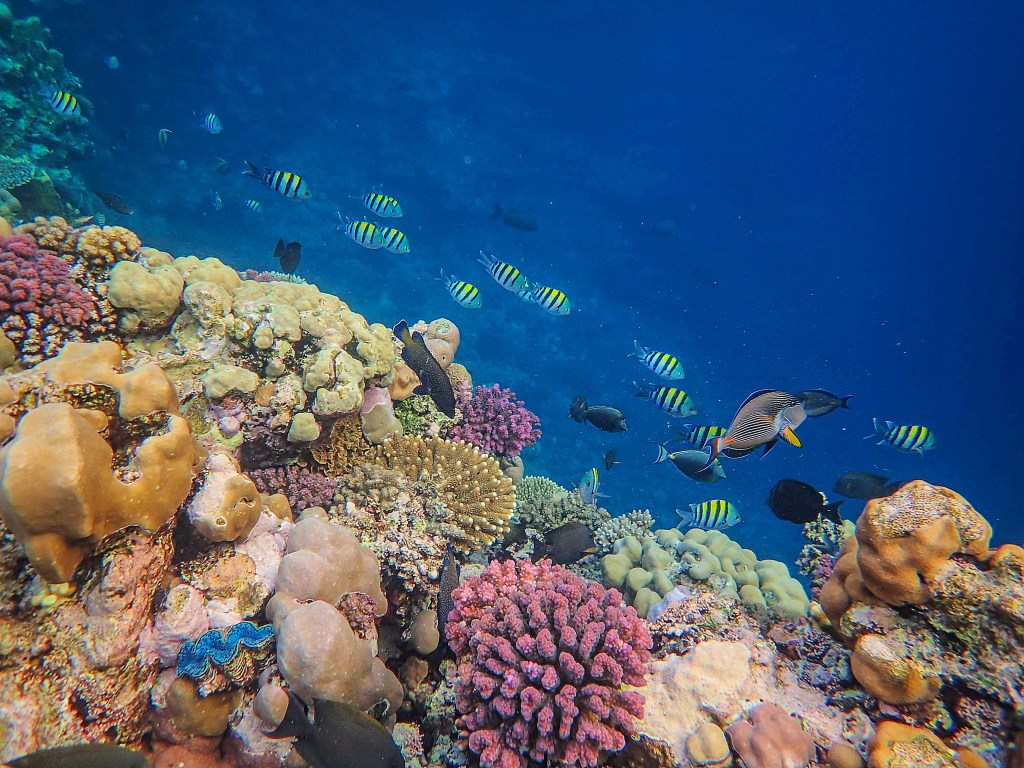
AN INTRODUCTION TO CORAL & CORAL REEFS
To understand the value of Coral we need to understand its role in the ocean as well as our relationship to the ocean. Be aware of the following factors, indicative that we actually live on PLANET OCEAN and not Earth.
- Earth (our planet) consists of 71% Ocean & Sea and only 29% land. Strange that it’s called earth when there is so much more water, right? Planet Ocean sounds more correct!
- The Ocean plays a crucial role in the Earths Oxygen cycle. It is estimated that 50% – 80% of the oxygen in the atmosphere comes from the ocean, with phytoplankton being a major producer.
- Our climate is regulated by the ocean in many ways – it absorbs Carbon, distributes heat and moisture, drive weather systems and as such plays a key role in our fresh water cycle.
- We have used it as a food source since the beginning of time!
- These days our economy relies on it as it supports industries such as fishing, recreation, tourism etc.
- It also provides certain medicinal compounds
- And it’s an inspiration for recreation, relaxation, art and literature.
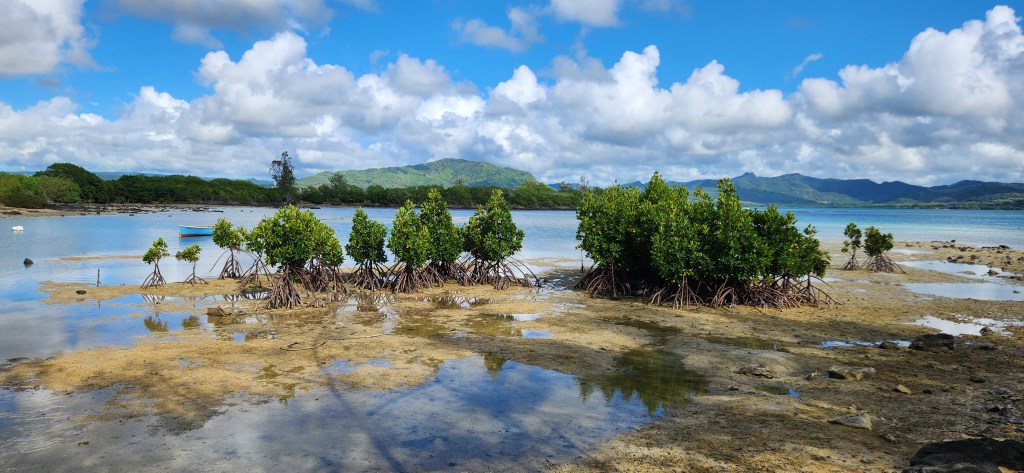
We usually meet the sea where it meets land. You’re probably thinking beach now! Where sea meets land is called “Intertidal Regions”, as they are affected by the tidal movement of the sea.
MARINE ECOSYSTEMS
- Beach – A dynamic ecosystem where land meets sea, supporting a huge diversity of life. This is where Sea Turtles lay their eggs! They protect coastlines from wave energy and erosion, but are so very vulnerable to human impact.
- Rocky Intertidal regions – where we see mussels and anemones and many other magical organisms in rock pools or exposed at low tide.
- Estuaries – are found where fresh water meets the sea. Like marshes and mangroves. This is a habitat for uncountable species (both terrestrial, aerial and marine). For the purpose of Coral we love this area as it forms a safe nursery for baby fish and the adults can hide here in the safety of grass and roots.
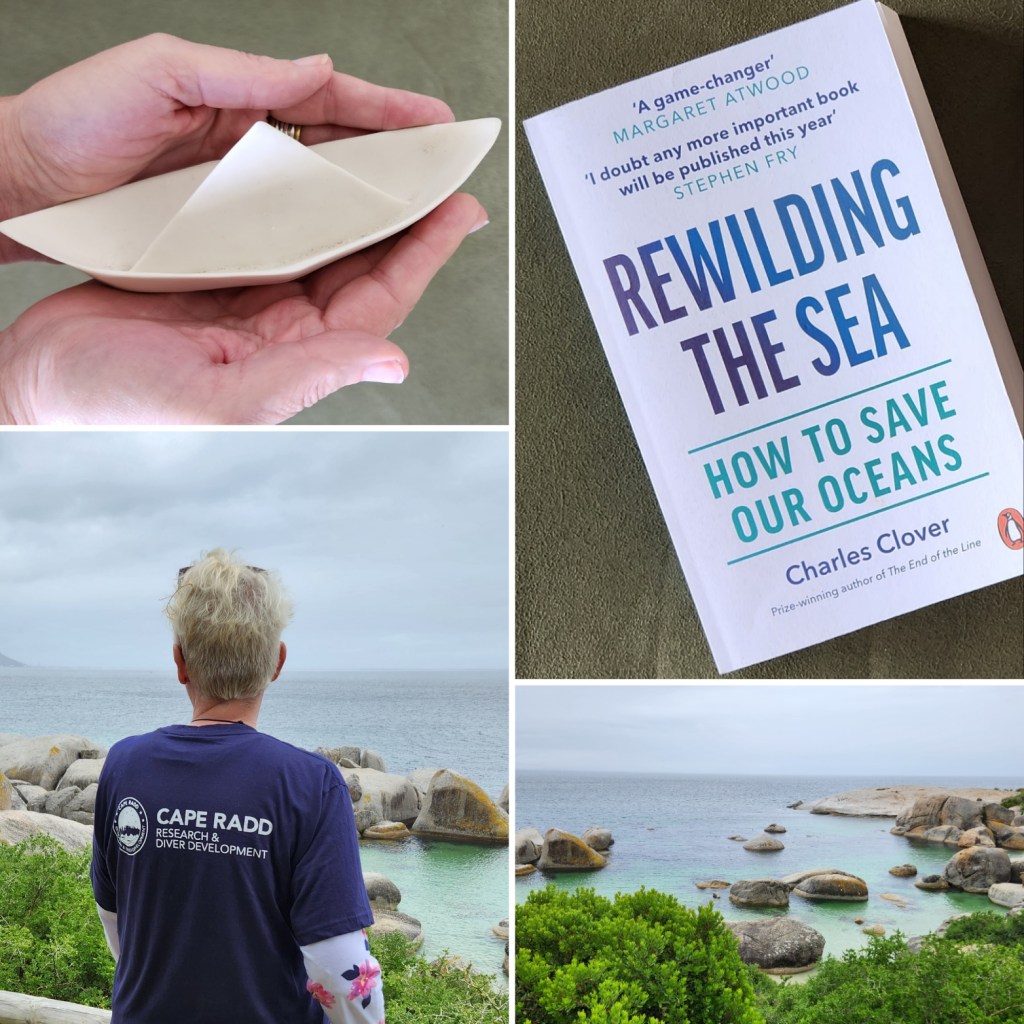
- Kelp Forest Regions – are better known on our colder and rocky shorelines. It forms a very diverse habitat for uncountable species and in False Bay, where I do Kelp Forest and Seal Diving – the ecosystem has been declared a HOPE SPOT by Mission Blue in 2014, because of its biodiversity, which is of critical importance to the health of the ocean.
- Coral Reefs! – Yes, we are finally joining the Coral in their warmer waters. Corals colonise rocky areas and build structures that form a super important productive and diverse ecosystem. Some Coral structures are so large that it can be seen from Space (Great Barrier Reef Australia). Thousands of species live on the Coral Reefs. Although the Reefs take up less than 1% of the sea floor, 25% of all Marine Life is estimated to live on Coral Reefs. This makes them a KEYSTONE SPECIE. This means that because they provide a home and food for such a vast number of marine organisms, Corals hold together this whole ecosystem.
- Open Ocean and 7. Deep Sea form the largest habitat on earth. As we’re talking about Coral, I will not elaborate, apart from saying that overfishing by large fishing vessels in these areas are depleting the Ocean of crucial food sources for many species, some which are Keystone Species in keeping our Ocean healthy and our planet human friendly. Where I stay, in South Africa, the African Penguin is critically endangered as a result of depleted food stocks. The message is clear – We need to rethink the way we live.
INTERDEPENDENCE
What amazed me when I started studying MARINE ECOLOGY, after getting certified as a SCUBA diver in December 2022, is the interdependence of each ecosystem on the next. In the Tropical Region the links between Mangroves – Sea Grass – Coral Reefs are very visible. (Remember the baby nurseries for fish families and others, who live on the Coral Reefs – This is my favourite example, as I have seen these nurseries in the roots of Mangroves in Mahebourg. I actually witnessed older fish babysitting the babies and hearding them to safety when the little ones started getting too curious).
As you can imagine, each ecosystem also provides food sources for the next ecosystem in Feeding Layers (Trophic levels). So if an ecosystem should collapse because a Keystone Specie is destroyed it affects the next FEEDING LAYER and the next! The balance of the whole ocean is impacted.
Now you know why I am so passionate about Coral! It is not only a Keystone Specie to 25% of marine organisms in the ocean and its destruction would result in a total collapse of the next food layers and balance of the ocean. It is magical and beautiful and to me it is the HEART of the ocean – The most creatively diverse, symbiotic and beautiful animal I have seen! Yes! CORALS ARE ANIMALS!
WHAT DOES CORAL LOOK LIKE?
At first glance, corals might look like plants or rocks, but they are actually animals. They are stationary, live mostly in colonies but also individually. We can distinguish HARD reef building Coral and SOFT coral which is flexible and moves with the movement of the ocean.
As we’re focussing on the Reef as Ecosystem, I am drawing your attention to HARD CORAL.
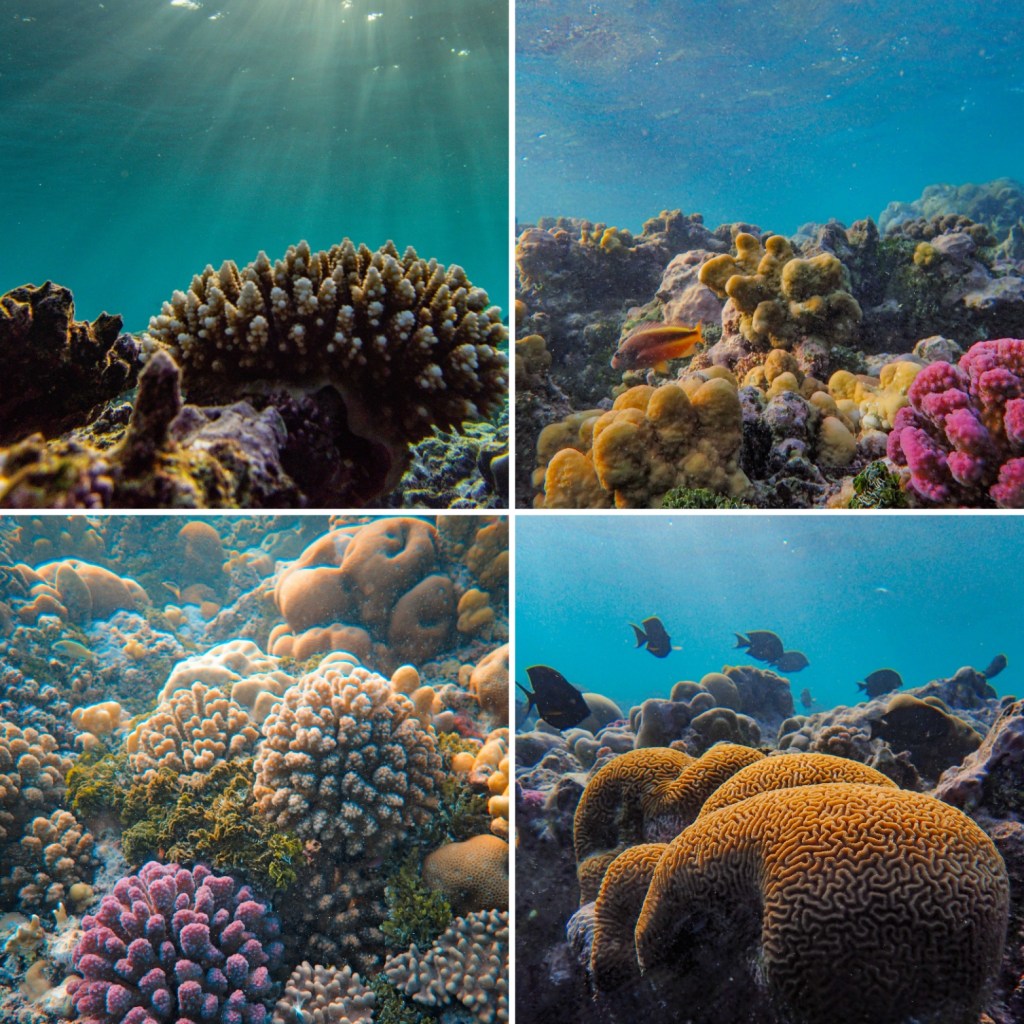
Each coral is made up of many tiny polyps, creating a living carpet covering the hard skeleton which it creates by secreting calcium carbonate. The Polyp is a sac-like animal with a mouth surrounded by tentacles and sting cells which assist in immobilizing and capturing prey. (Plankton and small fish) The limestone exoskeleton attaches them to the sea floor. This skeleton structure (corolite) is very unique to each species of coral. Growing slowly, it’s this structure of hard corals that forms the physical structure of Coral Reefs over centuries.
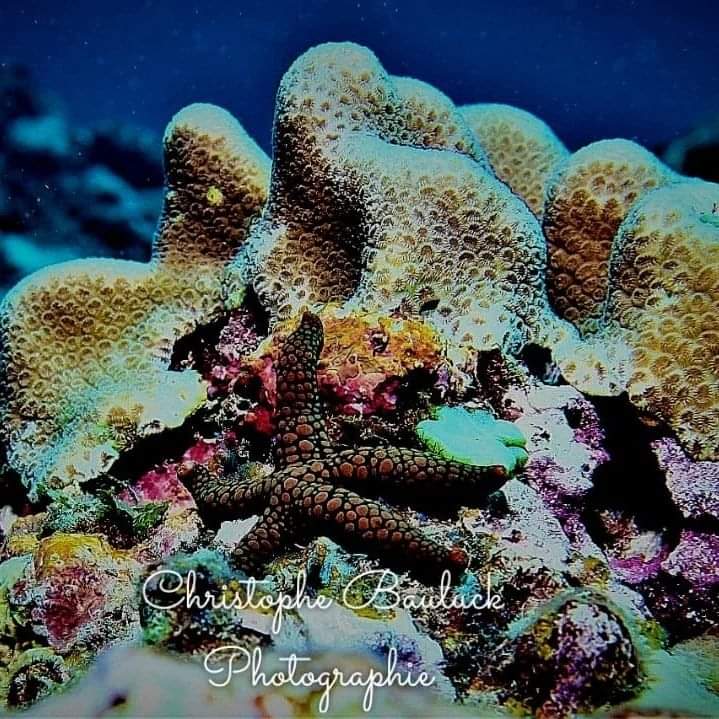
– photo credit Christophe Bauluck @scubaworlddivingmauritius
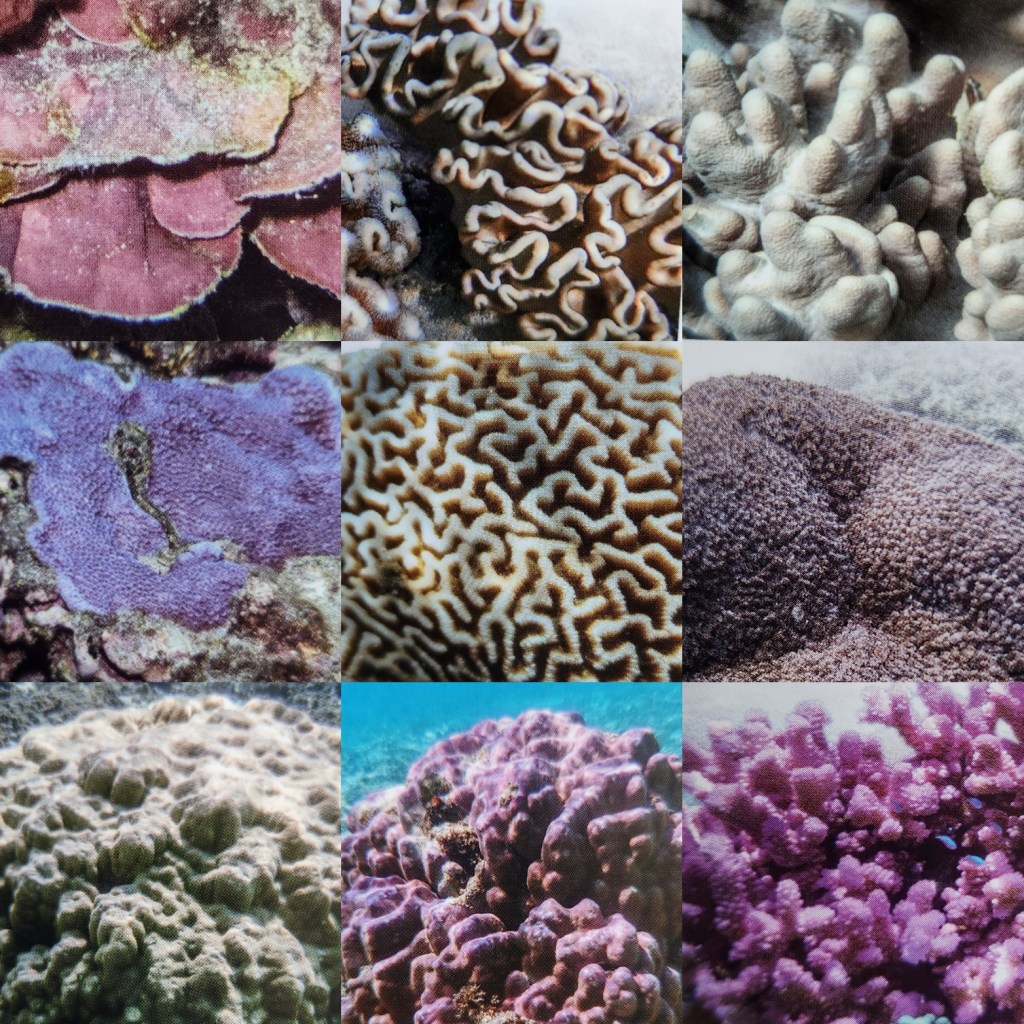
To distinguish the species of hard coral we look at their size and shape. The identification above is tricky as the shape is irregular instead of the dome-shape I would expect. The False Honeycomb Coral looks very similar. We are looking at living and growing marine life and not factory produced spesimens though! When looking to identify Coral, we can expect to find shapes like – Branching Coral (Tree shapes), Digitate (smaller flinger like extensions), Meandering (with intricate surface patterns, almost brain like), Encrusting (making a crusty layer over the skeleton), Massive (Domes), Plate (plate like), Columnar (single columns).
WHAT DO CORALS EAT?
How do they obtain enough energy to keep these complex colonies alive?
The polyps use their tentacles to catch prey, BUT they are even more evolved and complex than already mentioned! There are many animals on Coral Reefs who live in close symbiotic relationships with other animals or organisms. However none as dramatic as that of the relationship between Tropical Hard Coral species and the Photosynthesising Algae, Zooxanthellae.
In this relationship the Coral is the Host providing shelter, nutrients in its waste as well as carbon dioxide to the Algae, the Guest. The Algae can use sunlight to create sugars (photosynthesis), which the Coral can use as energy. This Algae (a very simple organism that is neither plant nor animal) lives in the tissue of the gastric cavity (a simple stomach) of the Coral Polyp. This seemingly simple algae is responsible for the fantastical colours of Corals.
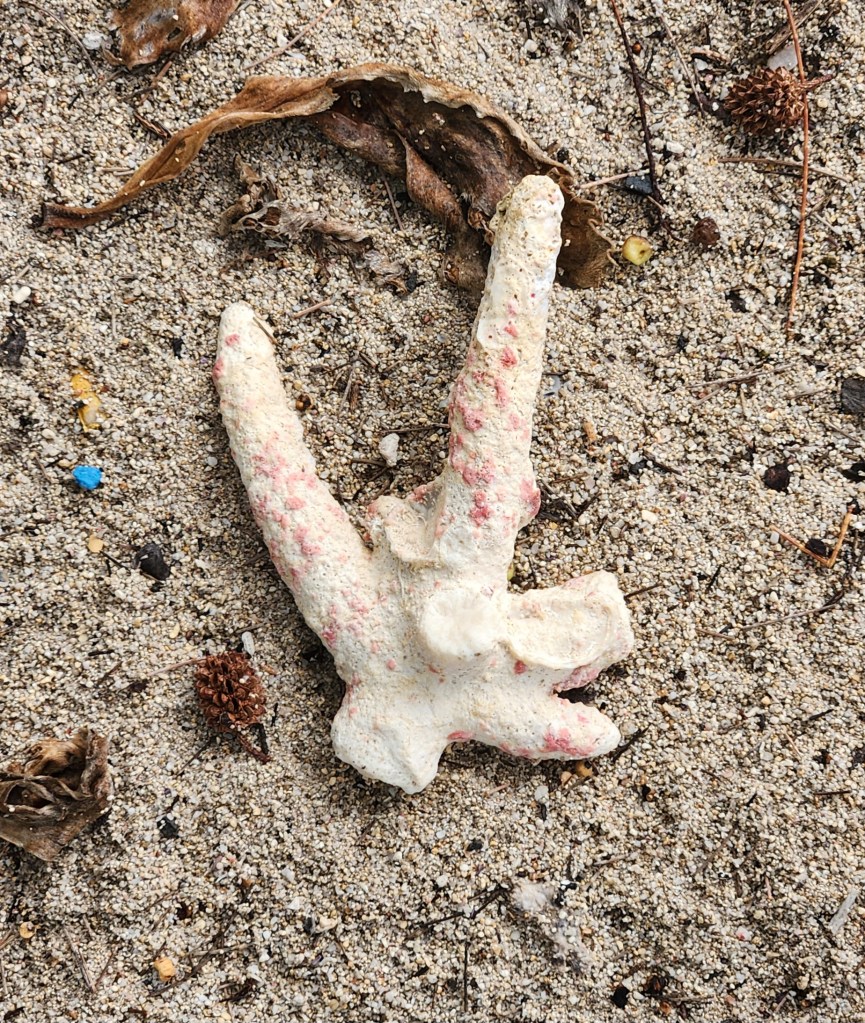
When Coral becomes stressed (usually as a result of heat or pollution), the drama begins. The Coral becomes aware that it cannot supply the elements needed to support the relationship with its Algae guest. As a last effort to conserve energy, they expel the Algae from their tissue. This process is referred to as Coral Bleaching. They lose their vibrant colours and the underlying limestone skeletons become visible. Resulting in their bleached appearance.
*In December 2024 my husband and I snorkelled on a shallow reef where we were pet sitting for a friend in Pt d’Esny, Mauritius. In 2 weeks we identified 78 different species of marine organisms on this portion of reef. It was like being inside an aquarium and the beauty is engraved in my heart forever. In January/February 2025, the water temperature increased to +30°C and that specific stretch of reef started bleaching. If the Coral Reef dies it can’t provide a safe home for all the inhabitants (which I feel I now know personally now).
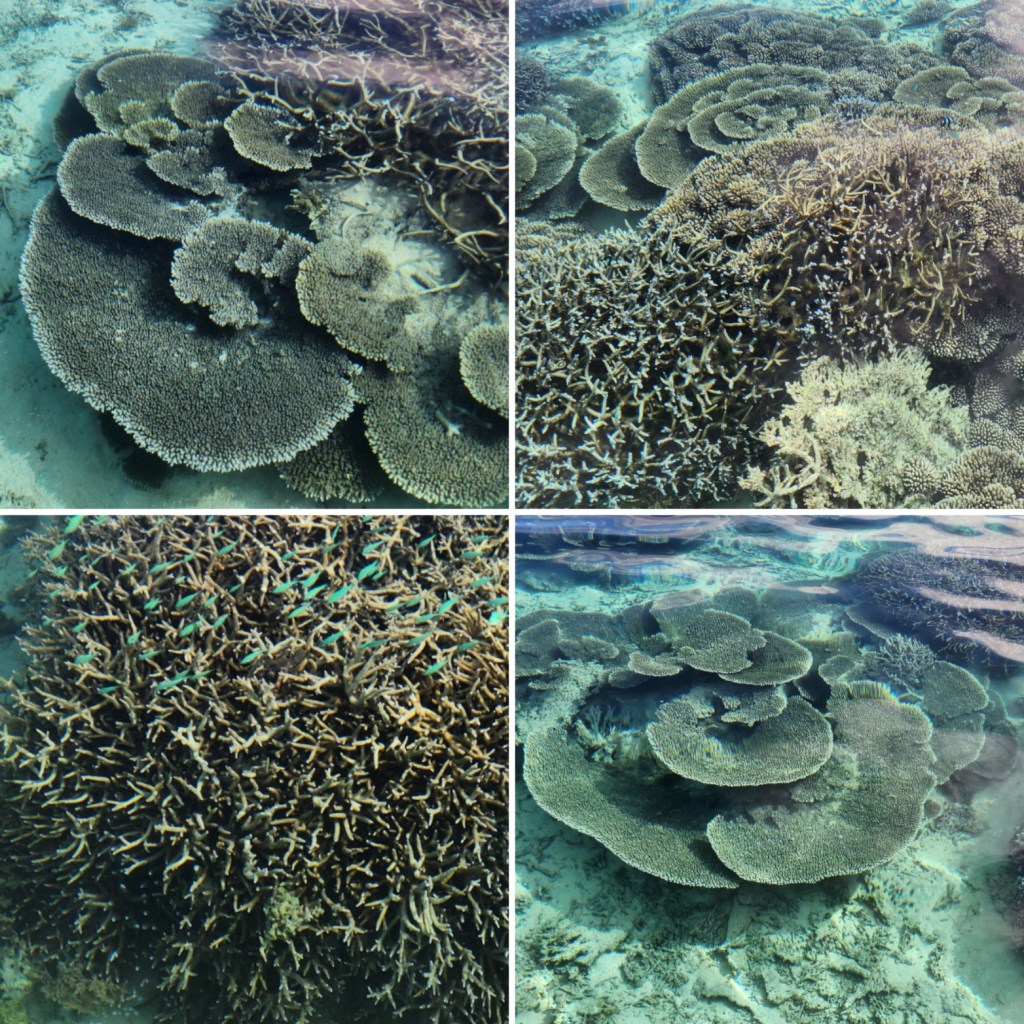
While prepping for this presentation, I read that – If the Coral was healthy before the bleaching event, and the conditions improve (water cooling down in this case) it is possible for the Corals to recover, if they are able to re-establish their relationship with the Algae. I am hoping and praying for this natural restoration!
Coral reefs are fragile ecosystems. They are sensitive to changes in water temperature as well as water quality and pollution. There are also many mechanical threats, like anchor damage from boats or other breakage. These are just a few of the odds that Coral survival faces.
ROMANTIC CORALS
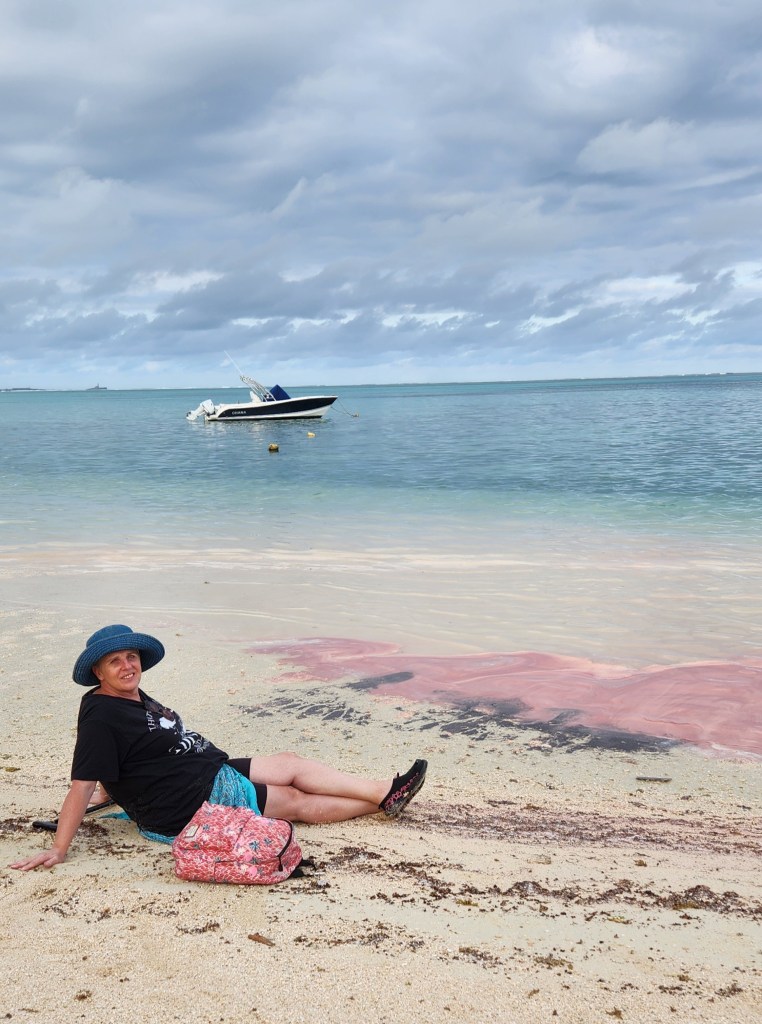
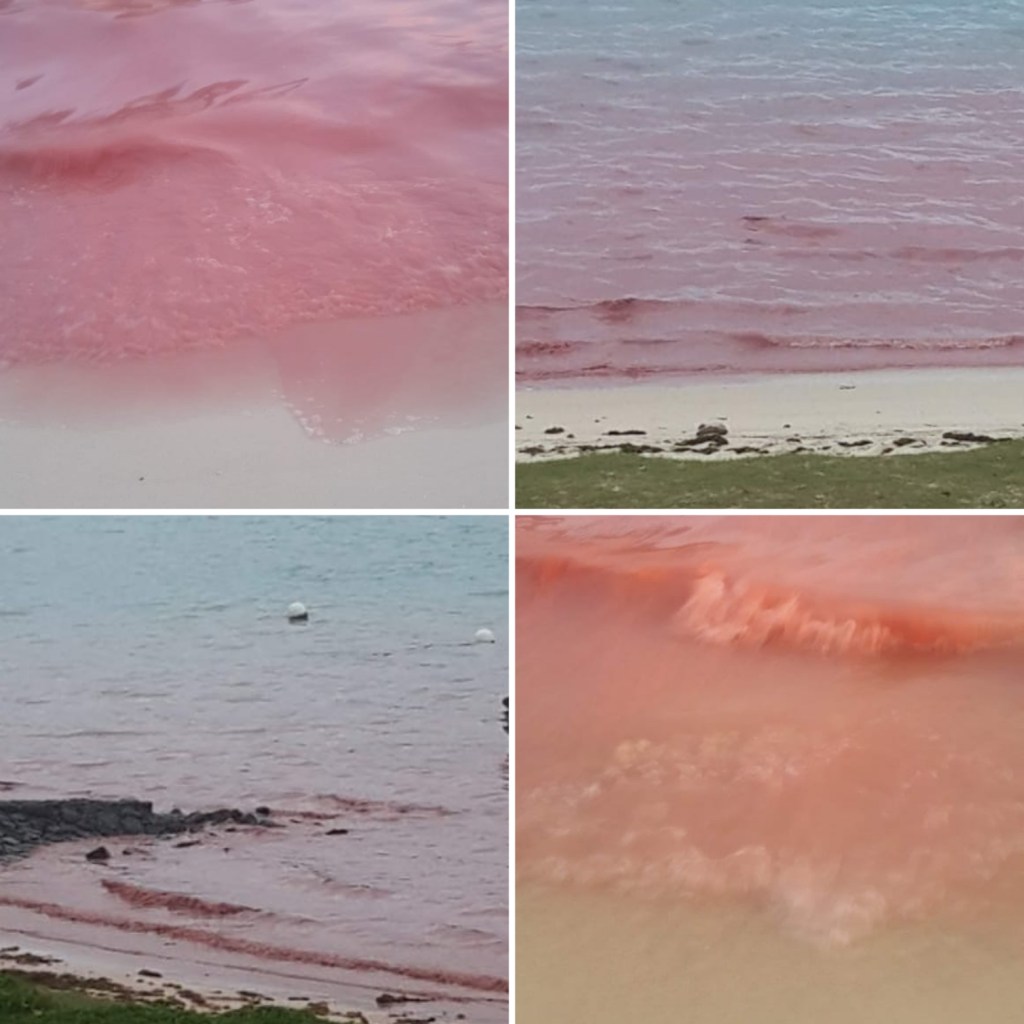
When the moon is full and everything is just so right, Corals have sex and make babies! In October 2024 I was lucky enough to witness a mass Coral Spawning in Pointe d’Esny, Mauritius. Everything must have been perfect for them to feel romantic! The light, the calmness and temperature of the water and probably some more mysterious factors – all had to be in sync for this magical moment. Before the spawning the Corals send chemical messages to their neighbours in a wide area and then they all release their eggs and sperm at the same time. They turned the usually pristine blue lagoon pink with their eggs and sperm, trying to reproduce so that they can thrive.
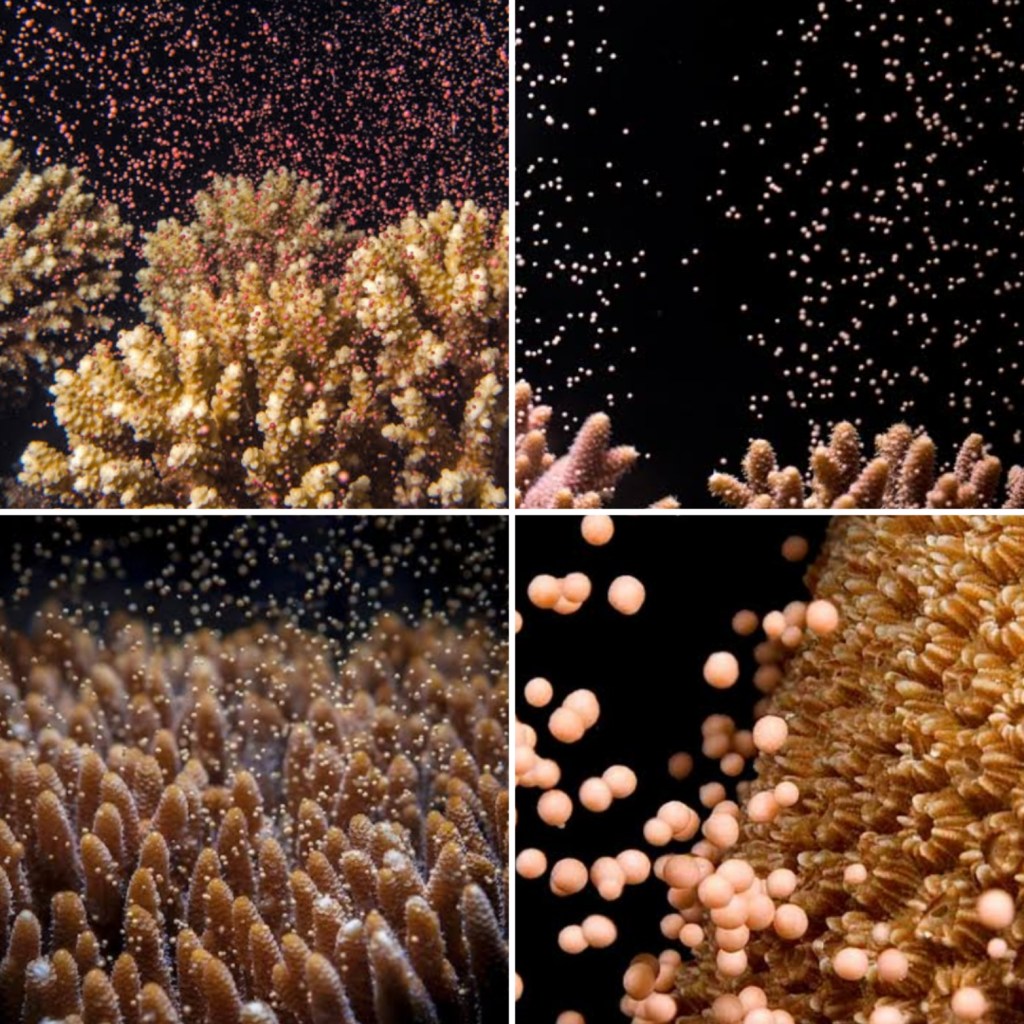
I use the word thrive for several reasons. Sexual reproduction by mass coral spawning has a greater genetic diversity contributing to the chances of the species survival. The mass spawning also gives the individual eggs and sperms a greater chance of fertilisation and survival from predators and it increases the geographic range where fertilised eggs will drift and the baby larvae will swim until it settles, to develop further.
It is indeed a MIRACLE EVENT. I took a bus to Pt’d’Esny beach which was the most accessible for me. When I saw the pink water and sand, tears were running. I sat down on the beach and praised God for the miracle of His creation. I prayed that many babies would grow from the spawning. Some German tourists approached and I was fortunate to be able to inform them of what they were witnessing and photographing!
With the next full moon, I was underwater on my first night dive on this stretch of reef. The Dive Centre arranged a special dive in the hope to witness some spawning on the reef while underwater. We drifted over the reef for 90 minutes. We did not see a spawning that night, but I experienced my beloved ecosystem’s night life! A different vibe altogether!
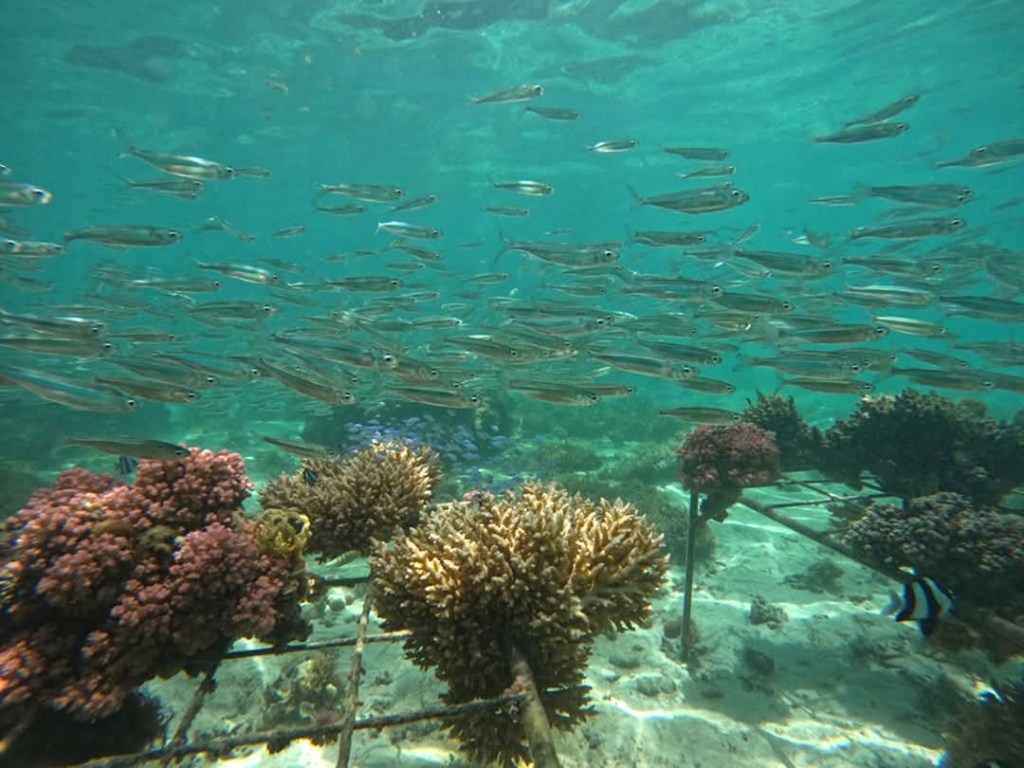
Corals also reproduce asexually. Fragments are taken from a healthy coral, placed in an underwater nursery, where it is cleaned and nurtured, for up to a year, before transplanted to a safe and viable place on a reef. Many marine conservation supporters are involved in this way to grow, transplant and restore Corals. It has been my dream since December 2022 to be part of such a Coral Conservation & Restoration team. I’m willing to make tea and sandwiches for the workers, if only I can be there! In the mean time I will talk and write about it!
I am excited at the opportunity to do my very first power point presentation in public this month. I will introduce an audience to THE HEART OF THE OCEAN – Coral Reefs!
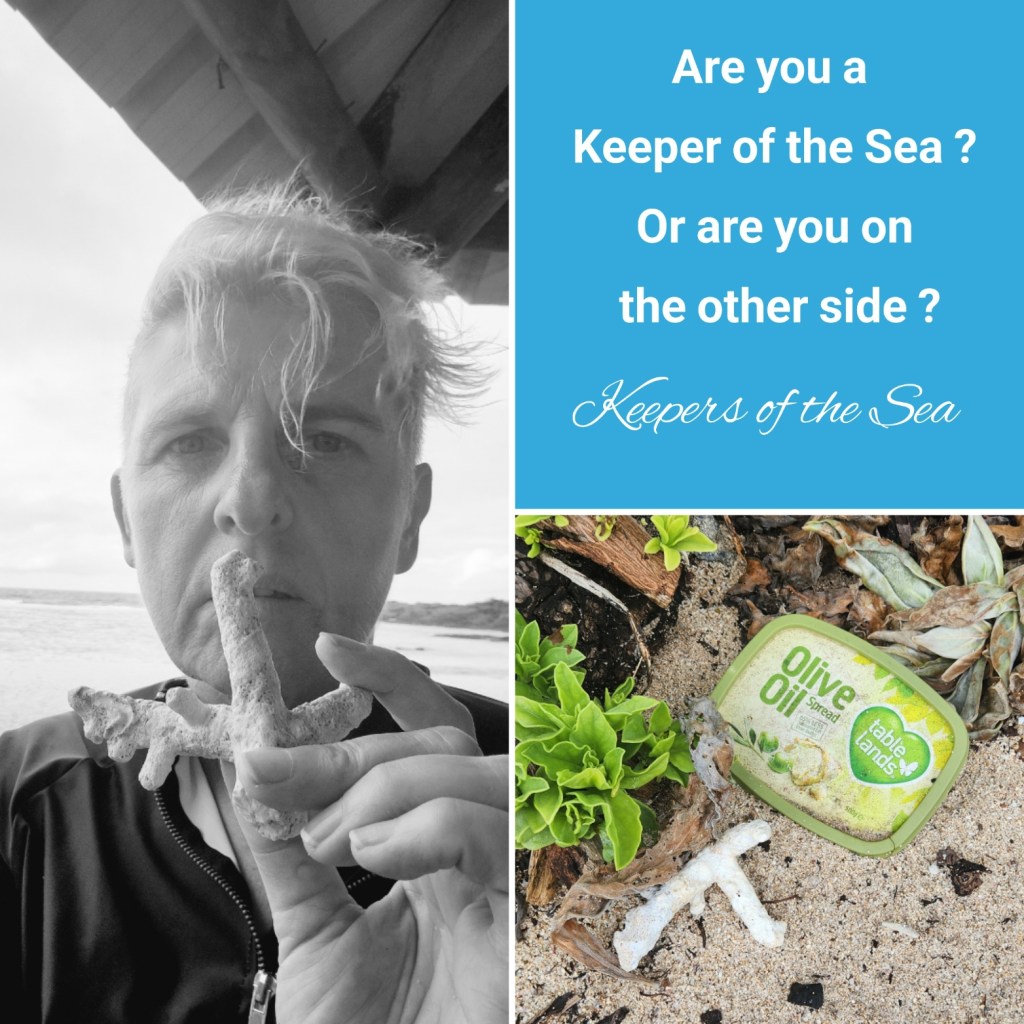
What can YOU do?
Don’t use plastic bags and avoid plastic purchases in general.
Get involved with clean ups – beach, rivers and land.
Sunscreen and other chemicals affect water quality on land and also in the ocean. All rivers run into the sea. Speak up when you see pollution going into rivers, please.
Speak up if you notice sewage running off into rivers or the sea.
Talk about the need to save the sea – create awareness.
Follow an organisation that does Coral Conservation & Restoration or other Marine conservation work on social media and share their posts.
If you are able to help marine conservation physically or financially – make the effort and get involved.
Be aware. Think before you buy or dispose of something and be the difference.
BE A KEEPER OF THE SEA
April 2025
Lynette Gerber-Lochenkov
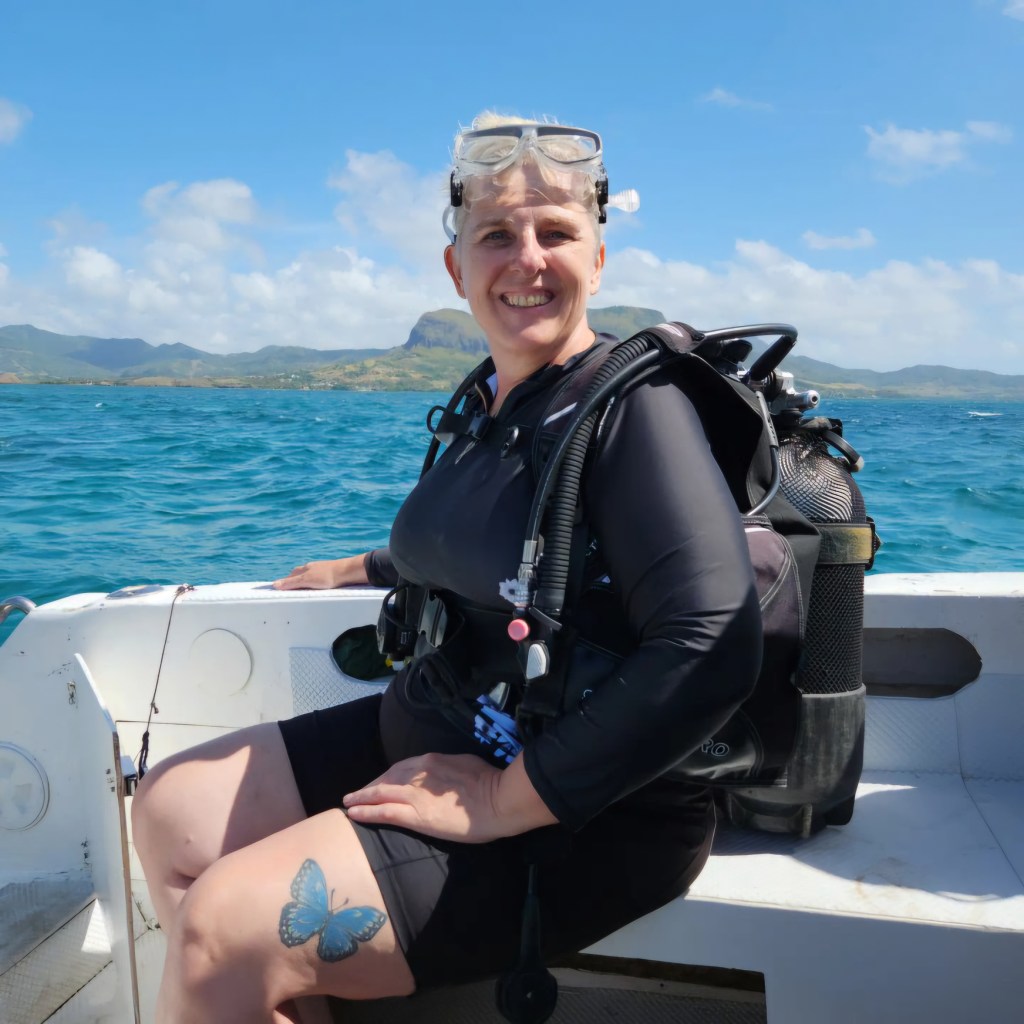
 Walk my Talk
Leave a comment